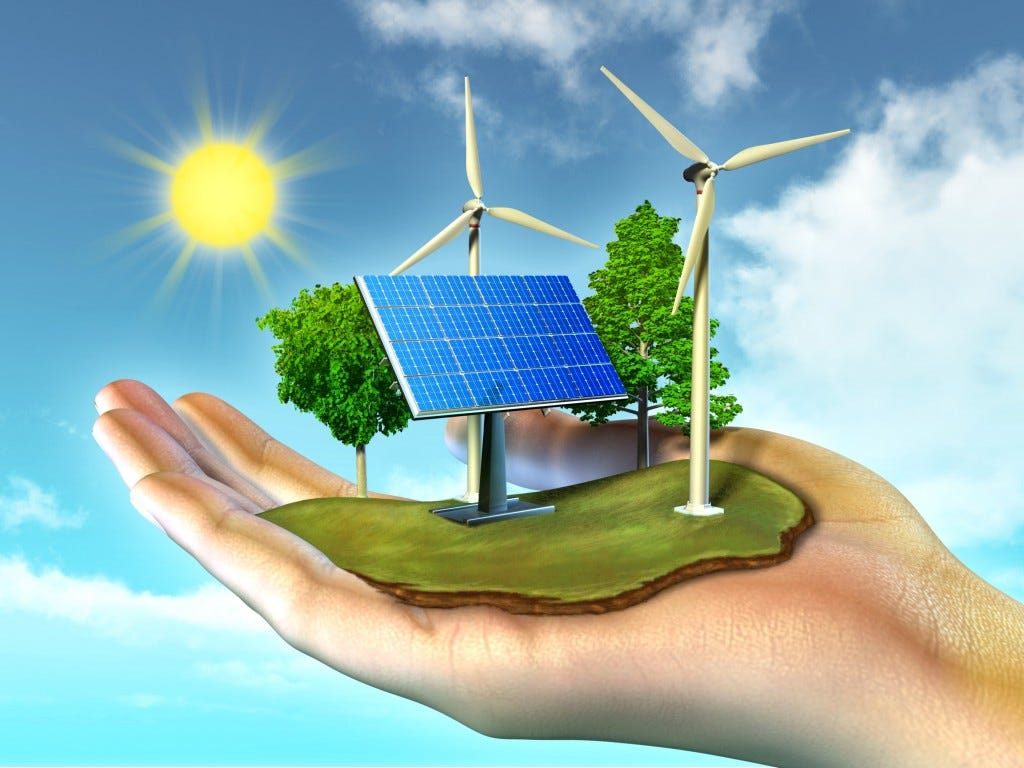
Solar power: Captures sunlight using photovoltaic (PV) cells to generate electricity for homes, businesses, and large-scale solar farms. Advancements include more efficient cells, bifacial panels, and building-integrated photovoltaics.
Wind power: Uses the kinetic energy of air to spin turbines and produce electricity. Wind farms can be located onshore or offshore, with offshore turbines generally capturing stronger, more consistent winds.
Hydropower: Generates electricity from the movement of water, such as from rivers, dams, or tides. Small-scale hydroelectric systems can provide power to remote communities.
Geothermal energy: Harnesses thermal energy stored beneath the Earth's surface for heating and electricity generation.
Biomass and biofuels: Use organic materials like wood waste, crop residue, and other organic matter to create energy. It is considered green only when managed sustainably to minimize emissions.
Green hydrogen: Produced using renewable electricity to split water through electrolysis. It serves as a clean, sustainable fuel and energy storage medium, especially for sectors that are difficult to electrify.